[Infographics] The Catalan Centre for Business and Human Rights: a key tool for investigating and taking action against rights violations
At Engineers Without Borders, we have produced a series of infographics to clearly explain how the future Catalan Centre for Business and Human Rights might operate: a public body needed to investigate human rights and environmental violations committed by companies operating in Catalonia.
This visual material provides an accessible overview of the research and action methodology set out in the Master’s Thesis Corporate Impunity and External Impact in the Global South. Proposal for an Accompaniment Methodology for the Catalan Centre for Business and Human Rights, written by Marta Buyreu Jorba and supervised by Gemma Tejedor Papell, Jordi Segalàs Coral, Sandra Tous Rodríguez and Nicolás O’Ryan Febre. With these infographics, we aim to help make a proposal that we consider urgent and necessary more understandable.
Their publication also comes at a key moment: the approval in the coming weeks of the Law on the Catalan Centre for Business and Human Rights by the Parliament of Catalonia. After more than ten years of collective advocacy by the Catalan Business and Human Rights Group — of which Engineers Without Borders is a member — Catalonia is taking a pioneering step towards establishing a public body to investigate human rights and environmental violations linked to companies operating within our territory.
A proposal to move from impunity to accountability
All too often, human rights violations linked to business activity go unpunished. Displaced communities, river pollution, labour rights violations and the persecution of land defenders are just some of the consequences of an economic model that prioritises profit over life.
The Catalan Centre for Business and Human Rights was established as a proposal to help reverse this situation. Its role would be to investigate complaints of violations committed outside Catalan territory but linked to companies operating here, and to activate mechanisms to ensure accountability, provide redress for damages and prevent such violations from recurring.
How would it work?
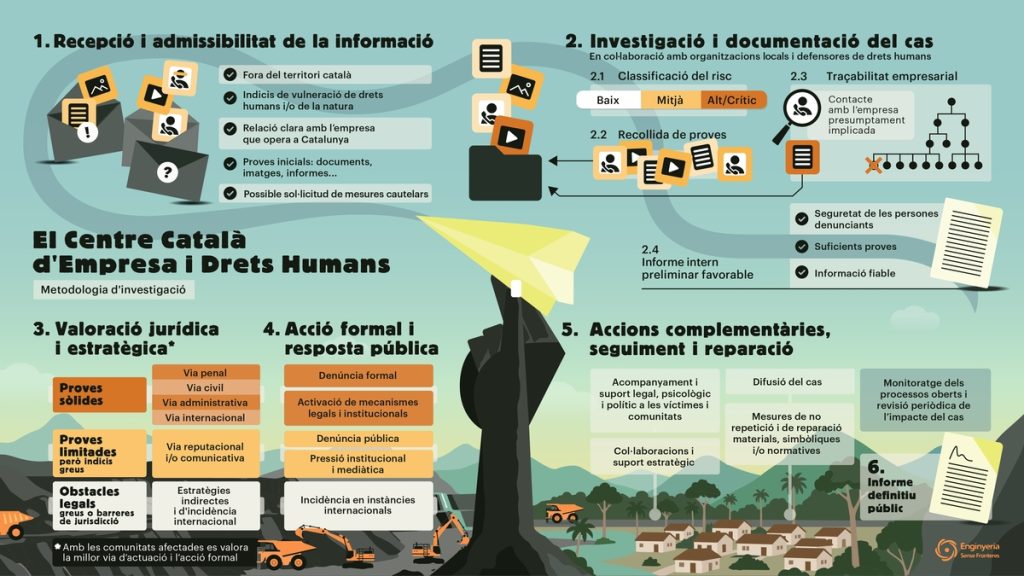
The infographics visually explain the different stages of the process:
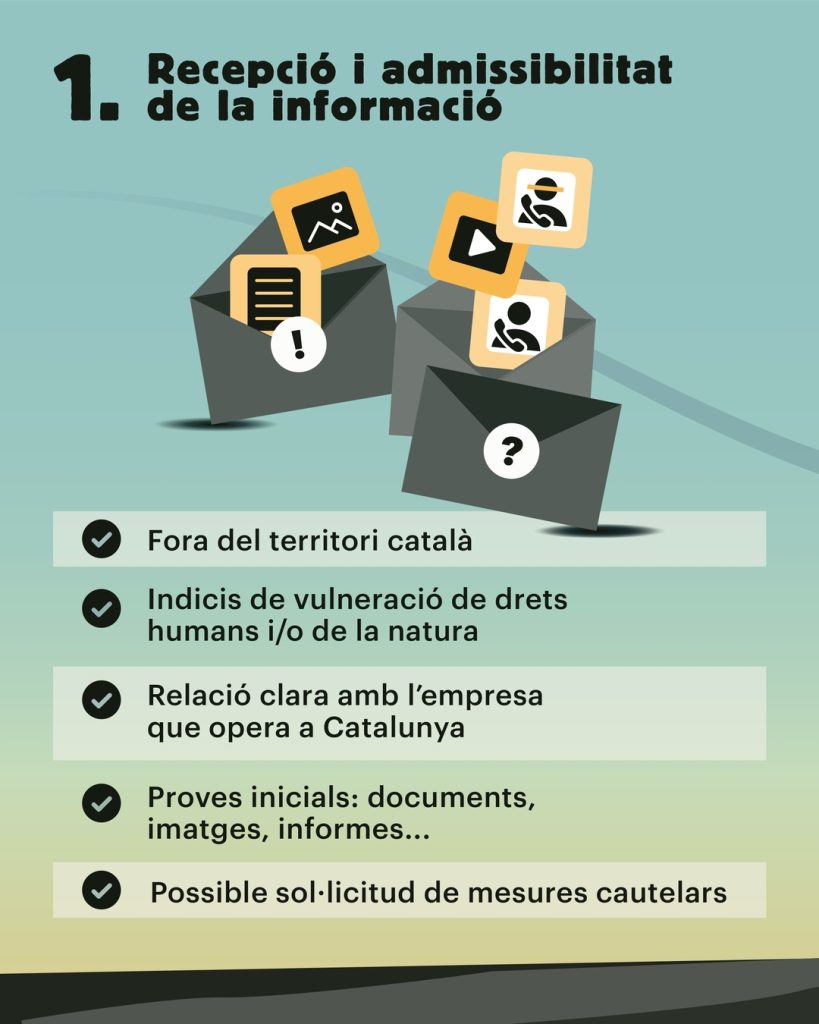
- Receipt and admissibility of information: initial assessment of the complaint, the available evidence and the link to the company.
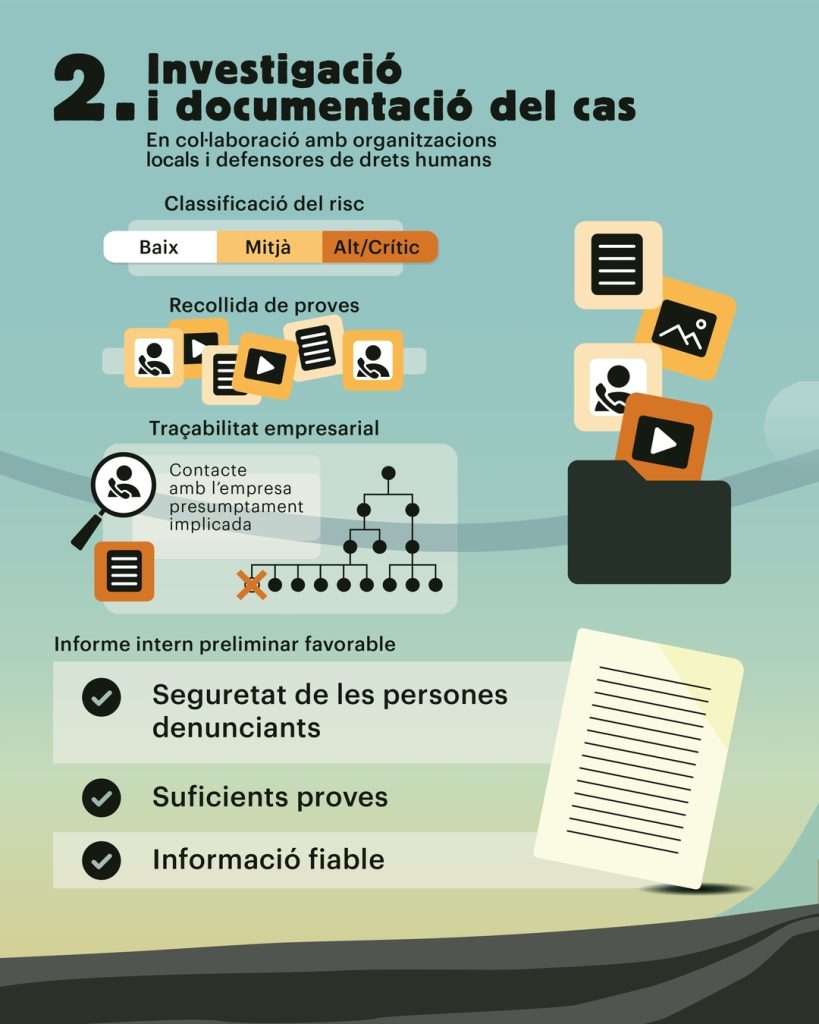
- Investigation and documentation of the case: collection of evidence, risk assessment and corporate traceability, in coordination with local organisations and human rights defenders.
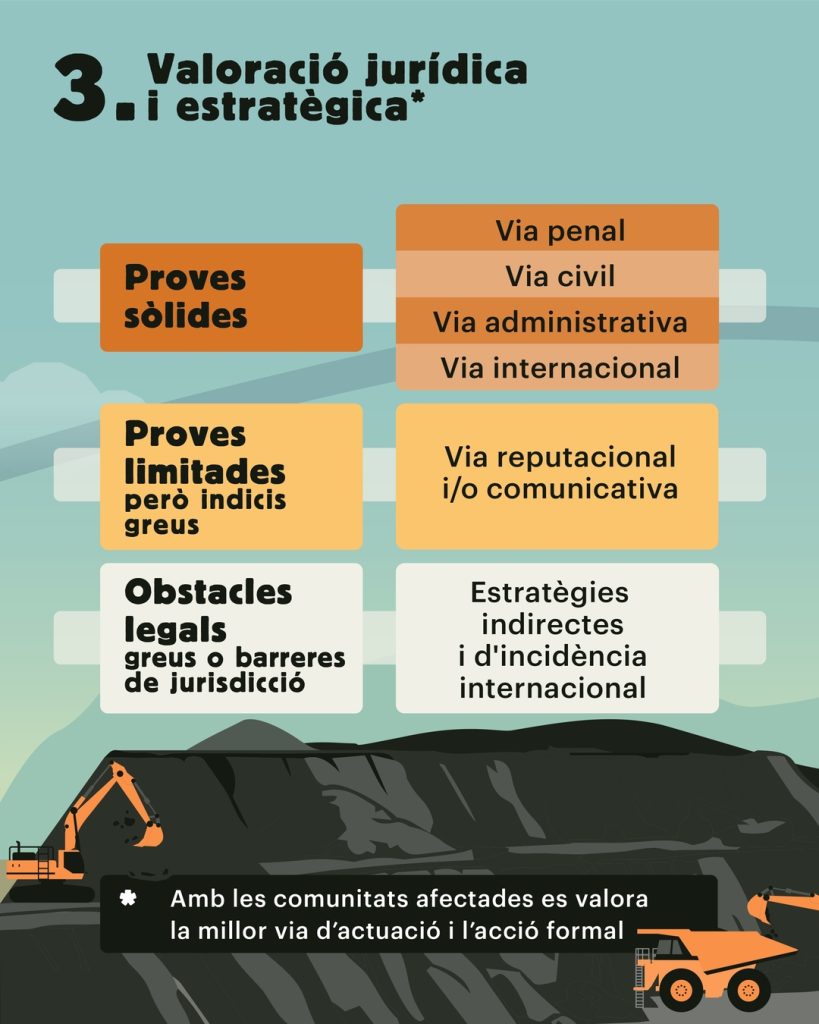
- Legal and strategic assessment: definition of the best course of action in consultation with the affected communities.
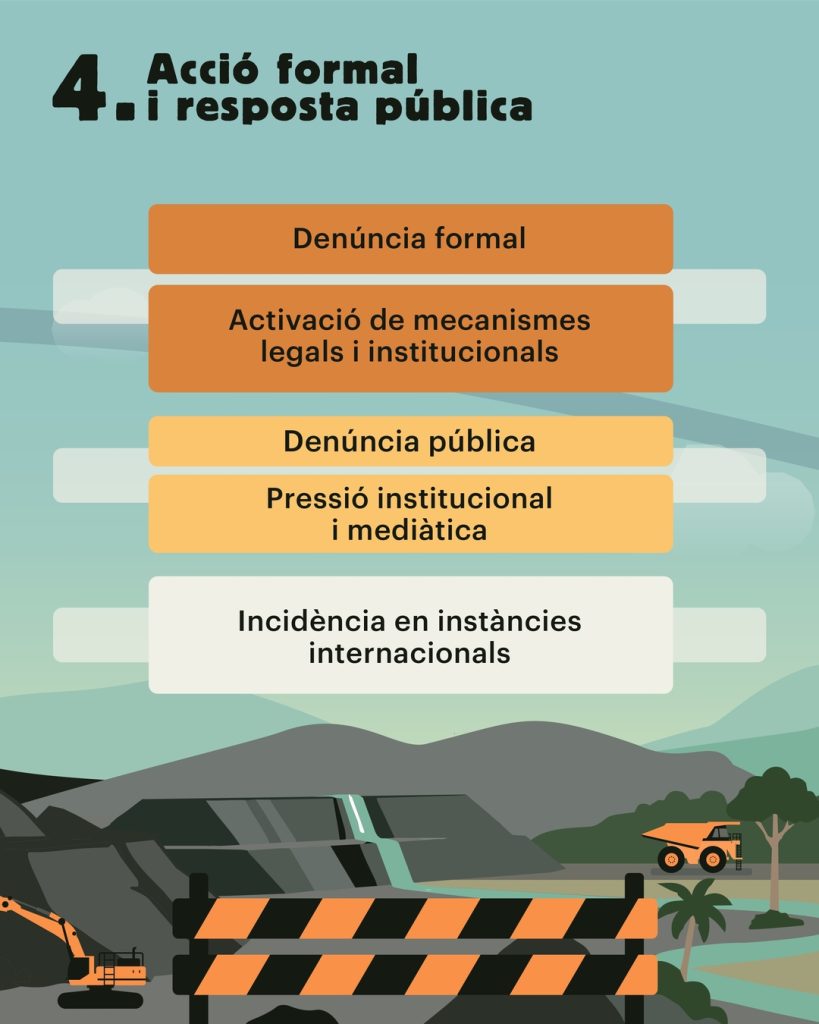
- Formal action and public response: activation of legal, institutional and public pressure mechanisms.
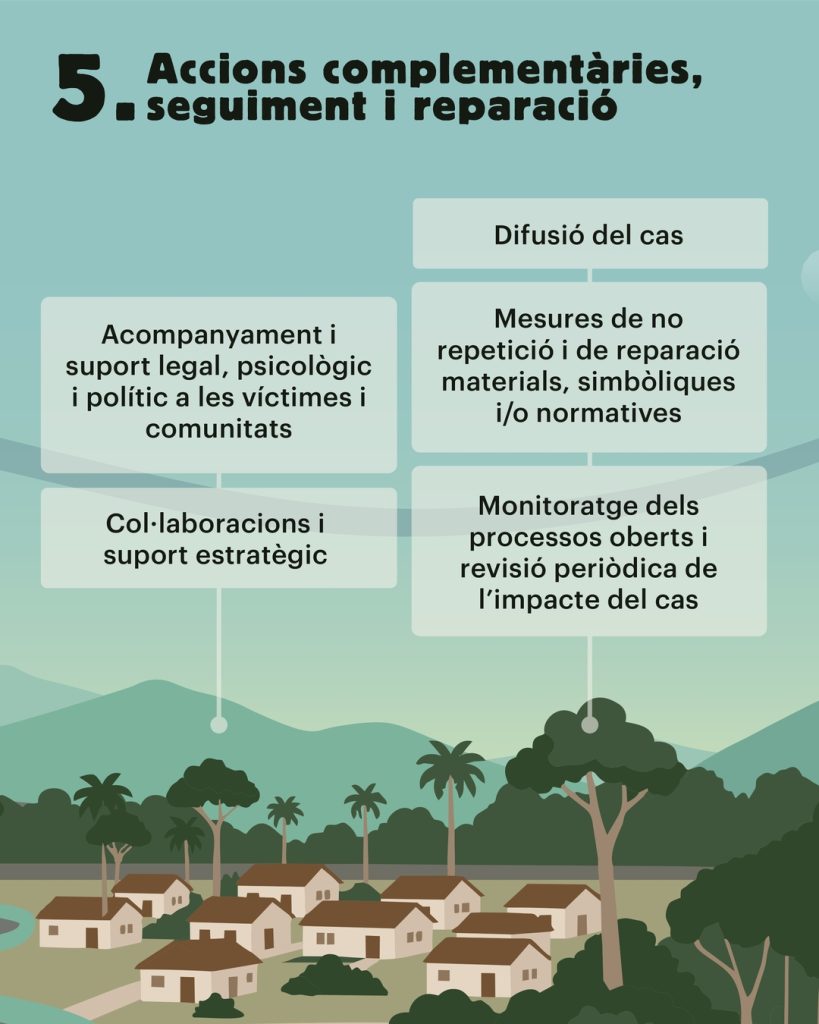
- Follow-up, redress and guarantees of non-repetition: support for victims and dissemination and monitoring of the case.
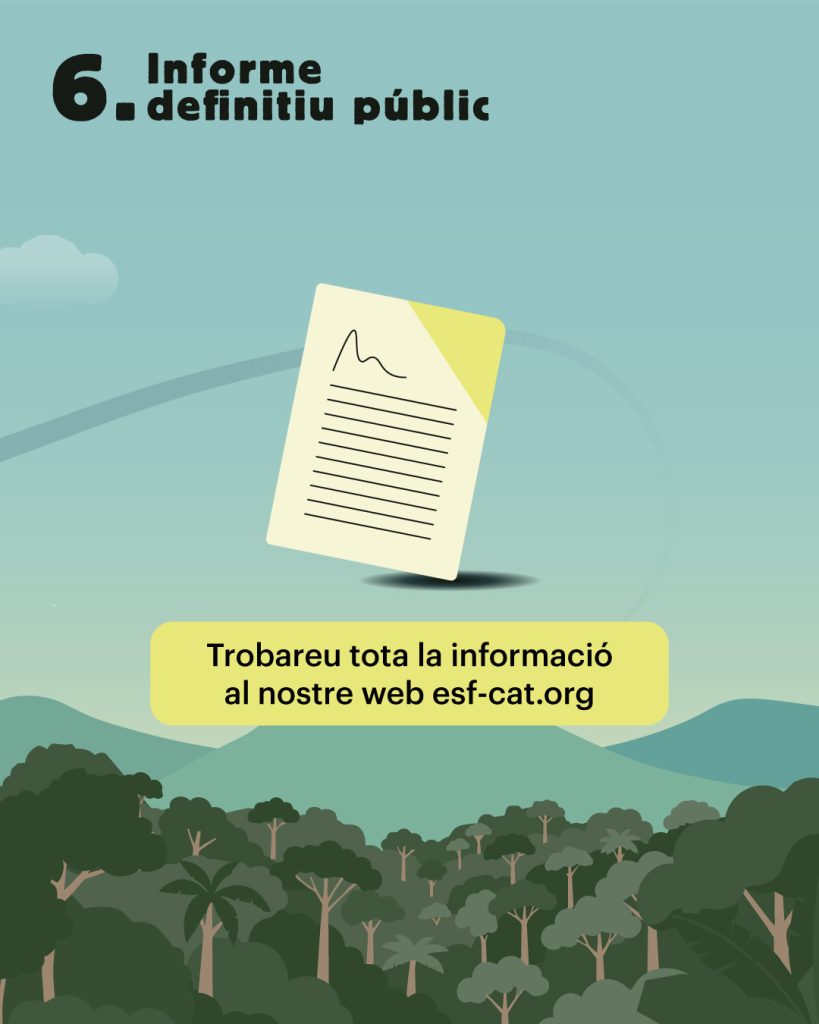
- Final public report: transparency and public accountability of the process.
Highlighting the impacts to change the rules of the game
These infographics aim to present the public with a concrete proposal to move towards a framework of public oversight of companies, put an end to corporate impunity and place human rights and environmental justice at the centre.
At ESF, we argue that Catalonia must equip itself with effective tools to ensure that companies operating within its territory respect the rights of people and territories worldwide.
We invite you to view and share the infographics to help expand this debate.
These infographics are supported by Barcelona City Council